Pet
Can Dogs Eat Celery? A Vet-Safe Guide for Pet Owners


Can dogs eat celery? Short answer: Yes — in moderation. Celery is a low-calorie, crunchy vegetable that can be a safe occasional treat for most dogs when properly prepared. It offers hydration, a bit of fiber, and small amounts of vitamins (A, C, K) and minerals — but it isn’t a substitute for a balanced dog diet.
This guide walks readers through the essentials pet owners really want to know: safety (choking & digestive risks), nutritional benefits, exactly how to prepare celery for different dog sizes (including puppies and seniors), suggested serving sizes, simple no-season recipes/enrichment ideas, and quick FAQs designed to win featured snippets. Content is written to match search intent for “can dogs eat celery” — clear, actionable, vet-consistent, and ready for schema markup and featured-snippet placement.
Is Celery Safe for Dogs?
The good news is celery is generally safe for dogs when it’s served plain, cut into small pieces, and offered in moderation. Unlike some human foods (such as grapes or onions), celery is not toxic to dogs. In fact, many vets approve of it as an occasional low-calorie snack.
That said, “safe” doesn’t always mean “risk-free.” There are two main concerns to keep in mind:
- Choking hazard
- Celery is fibrous and stringy. If you offer long stalks or large chunks, they can get stuck in your dog’s throat — especially for smaller breeds or puppies. Always cut celery into bite-sized pieces.
- Celery is fibrous and stringy. If you offer long stalks or large chunks, they can get stuck in your dog’s throat — especially for smaller breeds or puppies. Always cut celery into bite-sized pieces.
- Digestive upset
- While celery contains healthy fiber, too much can overwhelm a dog’s digestive system. Eating large amounts may lead to gas, soft stools, or diarrhea. Start with a very small serving and watch your dog’s reaction for 24–48 hours.
- While celery contains healthy fiber, too much can overwhelm a dog’s digestive system. Eating large amounts may lead to gas, soft stools, or diarrhea. Start with a very small serving and watch your dog’s reaction for 24–48 hours.
Finally, remember the 10% rule: treats (including celery) should make up no more than 10% of your dog’s daily calories. Celery is safe as an occasional snack, not a meal replacement.
Tip: If your dog has kidney problems, pancreatitis, or a very sensitive stomach, talk to your vet before introducing celery. Every dog is unique, and health conditions may require stricter dietary rules.
Nutritional Benefits of Celery for Dogs
Celery isn’t just a crunchy snack — it offers several nutritional benefits for dogs when fed in moderation. Here’s what makes celery a healthy treat:
1. Low in Calories
Celery is mostly water (about 95%), which makes it a low-calorie snack. This is great for dogs that need to maintain a healthy weight or for overweight pets who still want to enjoy crunchy treats.
2. Hydration
The high water content in celery helps with hydration, especially during hot weather or for dogs that don’t drink enough water. Adding celery to meals can slightly increase fluid intake.
3. Fiber
Celery contains soluble and insoluble fiber, which can aid digestion and promote a feeling of fullness. This makes it a good snack alternative to calorie-dense treats. However, too much fiber can lead to gas or diarrhea, so moderation is key.
4. Vitamins & Minerals
Celery provides small amounts of:
- Vitamin A: Supports vision and immune function.
- Vitamin C: Acts as an antioxidant.
- Vitamin K: Important for blood clotting.
- Potassium: Helps with muscle and nerve function.
- Folate: Supports overall cellular health.
While these nutrients are not sufficient to replace a balanced diet, they provide a healthy supplement and variety for your dog.
5. Dental Benefits
Chewing raw celery can help remove soft debris from a dog’s teeth and provide mild freshening of breath. It’s not a substitute for regular dental care but a useful snack for oral enrichment.
Who benefits most?
- Overweight dogs needing low-calorie snacks.
- Dogs who enjoy crunchy treats.
- Seniors needing gentle, hydrating snacks.
Risks & Precautions When Feeding Celery to Dogs
While celery is generally safe, there are some risks and precautions pet owners should be aware of before offering it regularly:
1. Choking and Obstruction
- Celery is fibrous and stringy, which can make long stalks or large chunks a choking hazard, particularly for small dogs and puppies.
- Solution: Always cut celery into bite-sized pieces suitable for your dog’s size. For very small dogs, dice or grate it finely.
2. Digestive Upset
- Too much celery at once can cause gas, soft stools, or diarrhea, especially if your dog isn’t used to fiber.
- Solution: Introduce celery gradually and start with just a few small pieces.
3. Pesticide Residue
- Celery can hold pesticides in its fibrous stalks.
- Solution: Wash thoroughly under running water or choose organic celery when possible.
4. Allergies or Sensitivities
- Rarely, dogs may have a sensitivity to new foods, including celery.
- Signs to watch for: vomiting, diarrhea, hives, or swelling. If these appear, stop feeding celery immediately and consult your vet.
5. Added Seasonings
- Never feed celery with salt, butter, garlic, onion, or dips — many human seasonings are toxic to dogs.
- Keep it plain and fresh.
6. Health Conditions
- Dogs with kidney disease, pancreatitis, or sensitive digestion may require dietary restrictions. Always consult a vet before adding new foods like celery to their diet.
Safety Checklist Before Feeding Celery:
- Wash thoroughly.
- Remove tough strings if needed.
- Dice into appropriate sizes.
- Start with a small portion.
- Monitor for digestive changes.
How to Prepare and Serve Celery for Dogs
Feeding celery safely to your dog requires proper preparation. Follow these tips to make it enjoyable and risk-free:
1. Wash Thoroughly
- Rinse celery under running water to remove dirt and pesticides.
- Scrub lightly if needed, especially along the fibrous strings.
2. Trim Stalks and Leaves
- Remove the base and thick strings.
- Leaves are edible but have a stronger flavor; use sparingly.
3. Cut into Appropriate Sizes
- Small dogs & puppies: tiny dice or grated pieces.
- Medium dogs: thin slices or small sticks.
- Large dogs: longer sticks or a small handful of chopped celery.
- Never serve whole stalks to small dogs due to choking risks.
4. Raw vs. Cooked
- Raw celery: preserves crunch and water content.
- Steamed celery: softens the fibers for easier chewing, especially for older dogs or dogs with dental issues.
- Avoid oil, butter, or seasonings — plain only.
5. Mixing with Food
- Sprinkle diced celery over kibble or mix with plain cooked rice or pumpkin for a fiber boost.
- This works well for picky eaters who enjoy texture contrast.
6. Fun Serving Ideas
- Frozen celery cubes: Perfect as a cooling summer treat; supervise to avoid swallowing large pieces.
- Enrichment snacks: Fill a hollowed celery stalk with a tiny bit of plain yogurt (if tolerated) or small treats for mental stimulation.
Pro Tip: Pre-cut celery stored in water in the fridge can stay fresh for a few days — rinse before serving again.
How Much Celery Can Dogs Eat?
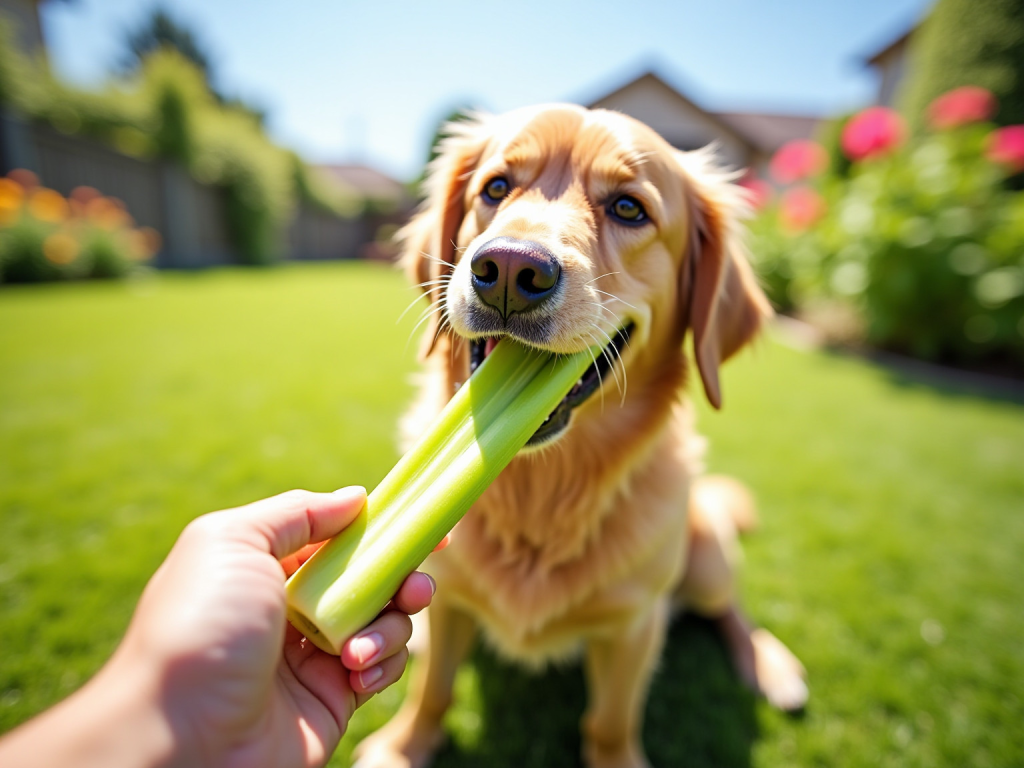
Even though celery is safe, portion control is important. Treats, including celery, should make up no more than 10% of your dog’s daily calories. Here’s a practical guide by size:
Portion Guidelines
- Toy & small dogs (under 10 lbs): 1–2 small dice pieces per day.
- Small dogs (10–25 lbs): 2–3 small pieces or 1–2 thin sticks.
- Medium dogs (26–50 lbs): 2–4 sticks or a small bowl of diced celery.
- Large dogs (50+ lbs): A few sticks or a small handful of chopped celery.
Tips for Safe Feeding
- Introduce gradually: Start with tiny pieces to avoid digestive upset.
- Use as a replacement: Replace high-calorie treats with celery instead of adding it on top of usual treats.
- Monitor your dog: Watch stool consistency, gas, or any signs of discomfort over 48 hours after introducing celery.
Pro Tip: Adjust the amount based on your dog’s activity level and overall calorie intake. Active dogs may tolerate slightly more, while less active dogs should stick to minimal portions.
Puppies, Seniors, and Special Cases
While celery is generally safe, certain groups of dogs need extra care:
1. Puppies
- Puppies have smaller throats and more sensitive digestion.
- Introduce after 4–6 months, once they are accustomed to solid foods.
- Serve only tiny, grated or finely diced pieces.
- Always supervise feeding to prevent choking.
- Use celery as a small occasional treat, not a primary snack.
2. Senior Dogs
- Many older dogs benefit from low-calorie, hydrating snacks.
- Celery can be helpful for seniors, but dogs with dental problems may need it softened by steaming.
- Chop finely to reduce chewing difficulty and risk of choking.
3. Dogs with Health Conditions
- Kidney disease: Monitor potassium intake; check with your vet.
- Pancreatitis or sensitive digestion: Celery is low in fat, making it generally safe, but avoid fatty toppings.
- Food allergies: Rare, but watch for vomiting, diarrhea, or skin reactions.
4. Medication Considerations
- There are no widely known interactions between celery and common canine medications.
- Still, check with your vet when introducing new foods regularly, especially for dogs on special diets.
Alternatives, Recipes & Enrichment Ideas
While celery is a safe snack, variety is important. Here are some healthy low-calorie alternatives:
Alternatives to Celery
- Carrots: Raw or lightly steamed; rich in beta-carotene.
- Cucumbers: Refreshing and low in calories.
- Green beans: Fibrous and filling.
- Apple slices: Sweet and crunchy, but remove seeds and core.
These options can replace celery or complement it for healthy snacking.
Simple Celery Recipes for Dogs (No Seasoning)
- Tiny Dice Treats: Chop celery into pea-sized pieces and offer as a low-calorie reward.
- Celery & Pumpkin Mix: Mix finely diced celery with a small spoonful of plain canned pumpkin for fiber and digestive support.
- Frozen Celery Bites: Fill an ice cube tray with water and small celery pieces, then freeze for a cooling summer treat.
- Enrichment Boat: Hollow a celery stalk and fill with a tiny amount of plain yogurt (if tolerated) or small kibble for mental stimulation.
Storage Tips
- Pre-cut celery can be stored in water in the fridge for a few days.
- Rinse before serving to maintain freshness.
Clearing Up Confusion
Q: Is celery toxic to dogs?
A: No. Celery is safe for dogs and not toxic. However, large amounts may cause digestive upset, and whole stalks can be a choking hazard.
Q: Can puppies eat celery?
A: Yes, but only in tiny, finely diced or grated pieces after 4–6 months of age. Always supervise to prevent choking.
Q: How should I prepare celery for my dog?
A: Wash thoroughly, remove tough strings if necessary, and cut into small, bite-sized pieces. You can also lightly steam celery for easier chewing.
Q: How often can dogs eat celery?
A: Celery should make up no more than 10% of daily calories. A few small pieces per day are usually sufficient.
Q: Can celery cause diarrhea in dogs?
A: Yes, if given in large amounts or if your dog is sensitive. Introduce celery gradually and reduce portions if diarrhea occurs.
Q: Are celery leaves safe?
A: Yes, but use sparingly. They have a stronger flavor and should be given in small amounts.
Q: Does celery help with dog breath?
A: The crunchy texture can help remove soft debris from teeth and freshen breath slightly, but it does not replace regular dental care.
Conclusion
Celery is a safe and healthy snack for most dogs when served in moderation and properly prepared. Its low-calorie, crunchy texture, high water content, and small amounts of fiber and vitamins make it a great occasional treat. It can support hydration, aid digestion, and even help with mild dental benefits.
Always cut celery into small pieces to prevent choking and follow the 10% treat rule—snacks should not exceed 10% of daily calories. Introduce celery gradually, watch for digestive changes, and consult your vet for puppies, seniors, or dogs with health conditions.
In short, celery can be a fun, nutritious, and low-calorie addition to your dog’s diet when given responsibly. By combining safety, moderation, and variety, you can offer your furry friend a crunchy treat they’ll enjoy without compromising their health.


Assimilasjon: Understanding its Meaning, Impact, and Role in Society

Calamariere: A Complete Guide to Meaning, Origin, Recipes, and Cooking Styles

Nerwey Guide: Meaning, Features, Benefits & Future Explained

Fappelo in 2026: Complete Guide to Features, Usage, Safety, and Facts

You Study for Months. You Pass One Exam. Your Salary Goes Up for the Rest of Your Career. That’s the Deal.

Assimilasjon: Understanding its Meaning, Impact, and Role in Society
Introduction: What is Assimilasjon and Why Does It Matter? In today’s globalized world, the concept of assimilasjon (assimilation) is becoming...
Calamariere: A Complete Guide to Meaning, Origin, Recipes, and Cooking Styles
Introduction: What is Calamariere and Why You Should Try It When it comes to Italian cuisine, few dishes capture the...

Nerwey Guide: Meaning, Features, Benefits & Future Explained
In today’s fast-moving digital era, new ideas spread quickly across the internet. People are always searching for concepts that feel...

Fappelo in 2026: Complete Guide to Features, Usage, Safety, and Facts
The term Fappelo has been appearing frequently online in 2026. Many people are searching for it every day. Some users...

You Study for Months. You Pass One Exam. Your Salary Goes Up for the Rest of Your Career. That’s the Deal.
Career planning advice tends to fall into two categories: the inspirational kind that makes you feel something and the practical...


Webfreen.com Fashion Collections for Men, Women & Kids (2026)
Webfreen.com has established itself as a go-to destination for fashion enthusiasts in 2026. Known for its diverse and stylish clothing...


Fashion White 2125: Characteristics, Uses & Specification Essentials
Fashion White 2125 is a premium laminate that has gained significant popularity in modern interior design. Known for its crisp,...
Health threetrees com vn Complete Guide for Total Wellness Daily
Introduction to Health threetrees com vn In today’s fast-paced world, reliable health guidance is essential. Health threetrees com vn is...

Tsunaihaiya Where Nature and Conscious Travel Meet
Travel today is no longer just about sightseeing. People are searching for meaning, responsibility, and deeper connection. Tsunaihaiya represents this...

Sustainable Stileloot Com Fashion Alternatives You Can Truly Trust
The global fashion industry is changing. Shoppers are no longer satisfied with fast trends, unclear sourcing, or vague promises about...
-
Trend Forecasting4 months ago
You Study for Months. You Pass One Exam. Your Salary Goes Up for the Rest of Your Career. That’s the Deal.
-
Fashion Marketing5 months ago
Sustainable Stileloot Com Fashion Alternatives You Can Truly Trust
-
Luxury Integrated Resorts5 months ago
Tsunaihaiya Where Nature and Conscious Travel Meet
-
 Tech6 months ago
A Clear Path to Better Health Conversations Through TimesHealthMag
-
Trend Forecasting5 months ago
Health threetrees com vn Complete Guide for Total Wellness Daily
-
Fashion Marketing5 months ago
Fashion White 2125: Characteristics, Uses & Specification Essentials
-
Modeling5 months ago
Webfreen.com Fashion Collections for Men, Women & Kids (2026)
-
Tech4 months ago
Nerwey Guide: Meaning, Features, Benefits & Future Explained